Blepharoplasty
Atlanta


Our eyes are considered to be one of our most important features. Changes around your eyes can impact the look of your whole face.
Our eyes are considered to be one of our most important features. Changes around your eyes can impact the look of your whole face. Loose skin might fold over your upper lids, and puffiness or bags under your eyes can make you look tired even if you feel fine. Blepharoplasty, or eyelid surgery, helps by removing or moving extra skin and fat as needed. At Nip & Tuck Plastic Surgery in Atlanta, Dr. Nicholas Jones customizes each procedure to fit your features and goals, aiming for a refreshed, natural look that keeps your eyes' unique character.
With a blepharoplasty Atlanta patients can address the skin on the upper and/or lower eyelids, removing any excess and tightening it up so that the skin around their eyes looks firmer, smoother, and more youthful. Blepharoplasty is a cosmetic surgery that reshapes the upper eyelids, lower eyelids, or both. Depending on your needs, the procedure may remove extra skin, adjust fat, and refine the tissues around your eyes to create a smoother, more natural look.
There isn’t one blepharoplasty technique that fits everyone. If you have drooping skin on your upper lids, your treatment will differ from that of someone mainly bothered by under-eye bags. Dr. Jones looks at your upper and lower eyelids, brow, and nearby facial features before suggesting the best approach.
Upper blepharoplasty removes just the right amount of extra skin from your upper eyelids and can also address fat if needed. As you age, the thin skin around your eyes can lose elasticity and start to fold over the eyelid crease, making your upper lids look hooded or heavy. In some cases, extra skin can even block part of your side vision. Upper eyelid surgery is carefully planned to improve the shape of your eyelids without taking away too much tissue or making them look too tight.
Lower blepharoplasty treats bags under your eyes, puffiness, loose skin, and other changes in the lower lids. Depending on your features, the surgery may remove or move extra fat, tighten sagging skin, or use both methods together. Moving fat instead of just removing it can help prevent a hollow look under your eyes. The goal of lower eyelid surgery is to create a smooth, natural transition between your eyelid and cheek.

People choose blepharoplasty for different reasons. Some want to address signs of aging, while others have always had heavy or puffy eyelids.
Blepharoplasty can address concerns such as:
Eyelid surgery has its limits. It doesn’t directly fix crow’s feet, fine skin texture, or some dark circles. Sometimes, droopy eyelids are actually caused by a low brow or eyelid ptosis, not just extra eyelid skin. A brow lift treats a low brow, while ptosis repair fixes weakness in the muscles that lift your upper eyelid. During your consultation, Dr. Jones will figure out the real cause before suggesting any procedure.
When the concern is coming from the eyelids themselves, cosmetic eyelid surgery can create a noticeable improvement without dramatically changing the rest of the face. Potential benefits include:
Good candidates are healthy adults with extra skin, noticeable fat, drooping, or other eyelid changes that surgery can realistically improve. It’s also important to have realistic expectations and be ready to follow instructions during recovery.
Age alone doesn’t decide if you’re a candidate for blepharoplasty. Genetics, skin quality, brow position, fat distribution, past surgeries, and how your face has changed all play a role. Dr. Jones will also ask about your eye health, dry eyes, thyroid issues, medications, smoking, and other health factors. If you have an active eye problem or another condition that could make surgery risky, you may need more evaluation or treatment first.

During your Atlanta blepharoplasty consultation, Dr. Jones will see if the procedure fits your needs. He’ll check your upper and lower lids, brow position, skin quality, eyelid position, and fat around your eyes.
He’ll also talk with you about your medical history, past facial procedures, current medications, eye health, and what results you want. This exam helps determine if extra eyelid skin is the real issue or if something else is causing the look you want to change. If blepharoplasty is right for you, Dr. Jones will explain whether you need upper, lower, or both eyelids treated. If another treatment like a brow lift would work better, he’ll let you know.
You’ll get detailed instructions before surgery based on your health and plan. Dr. Jones may ask you to avoid some medications or supplements that could increase bleeding.
If you smoke or use nicotine, you’ll likely need to quit before and after surgery, since nicotine can slow healing. Only stop prescription medications if your doctor and surgical team tell you to.
Blepharoplasty surgery is usually done as an outpatient procedure, so plan for a family member or another responsible adult to drive you home and help you at first. Getting your recovery space ready and picking up any needed supplies ahead of time can make your first days easier.
The surgical plan depends on whether Dr. Jones is working on your upper eyelids, lower eyelids, or both. At Nip & Tuck, you may have local anesthesia alone or with sedation, depending on your needs. Your anesthesia plan will be explained before surgery.
For upper eyelid surgery, Dr. Jones usually makes the incision in your natural eyelid crease. This allows him to remove extra skin and adjust muscle or fat if needed. Placing the incision here helps the scar blend in as you heal.
Lower eyelid surgery can be done in a few ways. If you have extra lower-lid skin, the incision may go just below your lower lashes. Sometimes, Dr. Jones can make an incision inside your lower eyelid, which leaves no visible scar and lets him remove or move fat, but this method doesn’t remove loose skin.
After blepharoplasty, you’ll likely have swelling and bruising for the first few days. Your eyes might water, feel dry or irritated, be sensitive to light, feel tight, or have blurred vision from ointment. Using cold packs and keeping your head up while resting can help you feel more comfortable.
Bruising and swelling usually get much better in 10 to 14 days, and most people feel ready to go back to work or social events in one to two weeks. If you have stitches on the outside, they may be removed after about a week, depending on your healing and the technique used.
You’ll need to avoid strenuous exercise, swimming, and some other activities until Dr. Jones says it’s safe. You may also need to skip contact lenses at first. Wearing sunglasses outside can help protect your eyelids from wind and sun.
You shouldn’t be in too much discomfort after your Atlanta blepharoplasty surgery, but if you are, your surgeon will be happy to prescribe you some pain relief. Most people are surprised by how much they heal in the first two weeks, but full recovery takes longer. Swelling and incision changes can keep improving for several months.
You’ll start to notice changes as swelling and bruising go down, but your results will keep improving over time. Most visible signs of surgery get better in the first few weeks, while your eyelid shape and incision lines settle over the next few months.
Blepharoplasty results usually last a long time. Many people keep their improvements for years, though eyelid surgery can’t stop aging. Over time, loose or droopy eyelids can come back as your skin and tissues age. Genetics, lifestyle, skin quality, and sun exposure all affect how your eyelids change.
Any surgery with an external incision will leave a scar, but blepharoplasty scars are made to be as hidden as possible. For upper eyelids, the incision is usually in the natural fold.
If a lower incision is needed, it’s placed close to your lower lashes. A transconjunctival lower blepharoplasty uses an incision inside your lower lid, so there’s no scar on the outside. If you do need an external incision, the scar usually softens and fades as you heal.
Blepharoplasty is surgery and has some risks, like bleeding, infection, dry or irritated eyes, uneven results, visible scars, trouble closing your eyelids, changes in eyelid position, or needing more surgery. You might have blurred vision for a short time during recovery, but serious vision problems are rare.
If you notice any symptoms Dr. Jones told you to watch for, contact Nip & Tuck Plastic Surgery right away. If you have severe new eye pain, heavy bleeding, or sudden vision changes, get medical help immediately.
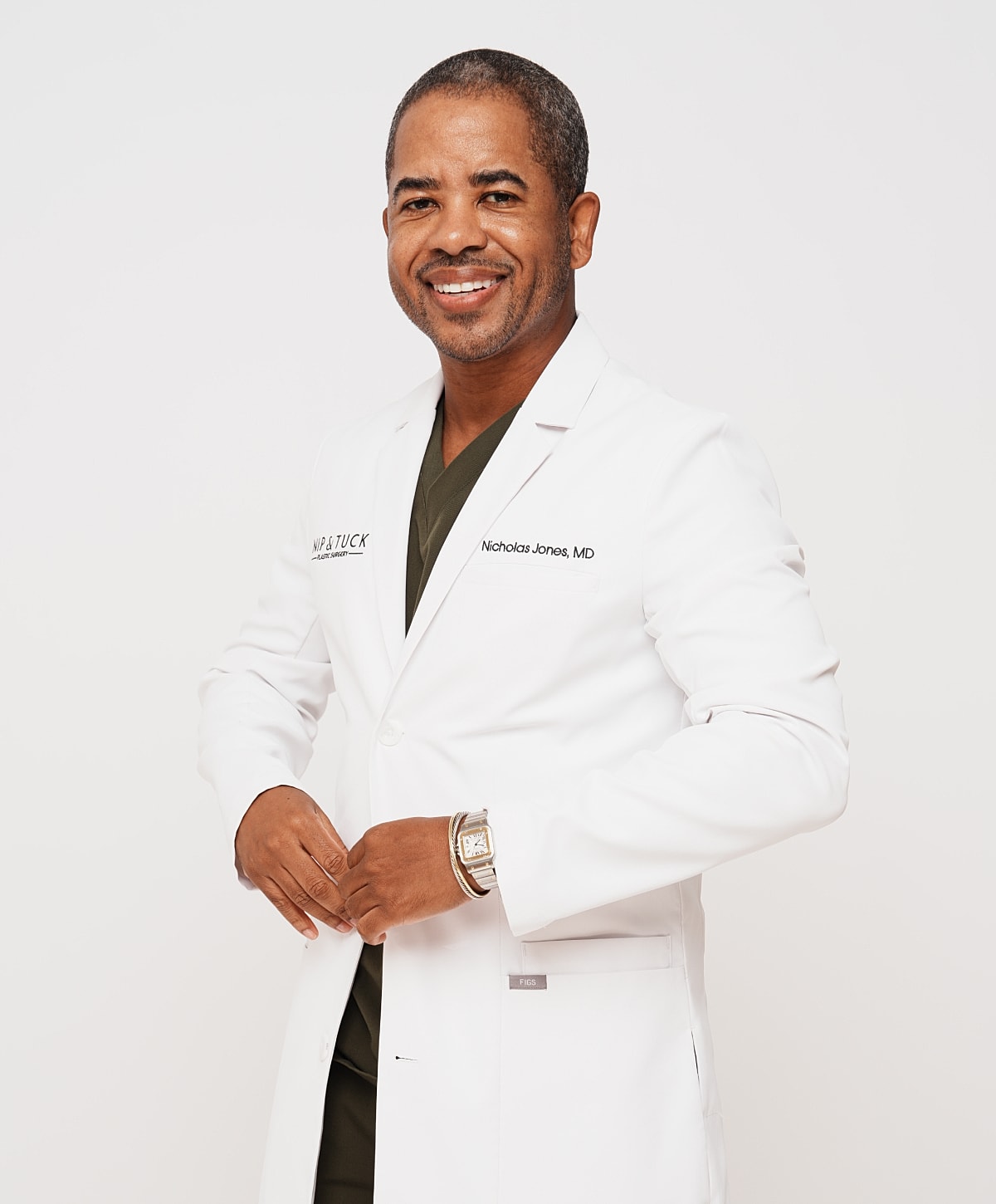
Dr. Nicholas Jones is an Atlanta aesthetic and reconstructive plastic surgeon who is double-board certified by the American Board of Plastic Surgery and the American Board of Surgery. He completed his general surgery residency at Albert Einstein Medical Center, followed by advanced fellowship training in microsurgery at the University of Mississippi Medical Center and a plastic surgery residency at the Medical College of Georgia. He also spent a year working as a trauma surgeon, giving him broad experience with facial anatomy, tissue handling, and surgical care.
Following his formal training, Dr. Jones completed a clerkship with Dr. Marcelo Araujo, a world-renowned cosmetic surgeon in São Paulo, Brazil, to further refine his aesthetic technique. His background in aesthetic, reconstructive, trauma, and revision surgery shapes the way he approaches blepharoplasty. Because the eyelids are closely connected to the brow and surrounding facial structures, he evaluates the eye area as a whole and plans surgery around each patient’s anatomy, degree of excess skin or fat, and natural features.
Dr. Jones’ philosophy is to provide high-quality aesthetic and functional results while maintaining professionalism, safety, and comfort. He takes time to explain what eyelid surgery can realistically change and whether another procedure, such as a brow lift, may be appropriate. Patients also receive clear postoperative instructions and attentive follow-up throughout recovery, so Dr. Jones can monitor the healing process as the final result develops.

Don’t let sagging skin around your eyes make you look and feel older than you really are. Blepharoplasty can transform your appearance and restore the confidence that you deserve to have. At Nip & Tuck Plastic Surgery, we strive to deliver the best blepharoplasty Atlanta has to offer. Contact us today to schedule your consultation appointment.
Blepharoplasty results can last for many years, and some people keep their improvement even longer. Lower eyelid surgery often doesn’t need to be repeated. However, the procedure can’t stop normal aging, so your eyelids and nearby tissues may change over time.
Most people need about 10 to 14 days for the main bruising and swelling to go down, though some feel ready to return to work sooner. Full healing takes longer, and minor swelling or incision changes can keep improving for months.
Yes, lower blepharoplasty can help reduce under-eye bags if extra fat is causing the puffiness. Dr. Jones may remove or move the fat to keep a natural look and create a smooth transition between your lower eyelid and cheek.
Yes. Many people choose to have both upper and lower eyelid surgery at the same time if both areas need treatment. Dr. Jones will look at each area separately before deciding if combining the procedures is right for you.
Blepharoplasty treats the skin and tissues of your eyelids, while a brow lift moves the tissues of your forehead and brow. Since a low brow can make your upper eyelids look heavy, Dr. Jones checks your brow position before deciding if upper eyelid surgery alone will give you the results you want.
It can, if extra upper eyelid skin is blocking part of your vision. If you have functional eyelid concerns, you’ll need a proper evaluation and possibly more tests. Cosmetic blepharoplasty to improve appearance is different from surgery done to fix vision problems caused by eyelid tissue.
Cosmetic eyelid surgery usually isn’t covered by health insurance. Sometimes, insurance will help if extra upper eyelid skin is blocking your vision and it’s medically necessary. Coverage rules vary, so check your plan to see what’s included.
The cost of blepharoplasty depends on whether you need upper eyelid surgery, lower eyelid surgery, or both, as well as the complexity, anesthesia, surgical fees, and whether you’re having other procedures at the same time. After your consultation, Nip & Tuck Plastic Surgery will give you a personalized estimate based on your plan.