Lipo 360


Reaching a stable weight takes effort, and it can be frustrating when your midsection still doesn’t reflect that work. Fat around the stomach, waist, or back is often influenced by genetics and may remain even with consistent exercise and a healthy diet.
Lipo 360 gives Dr. Nicholas Jones a way to refine these areas together, bringing greater definition to the waist and a smoother shape to the torso. Every procedure at Nip & Tuck Plastic Surgery in Atlanta is tailored to the patient’s frame, comfort, and personal goals.
Circumferential liposuction and body contouring
Upper and lower abdomen, waist, flanks, and back
Fat reduction and improved overall body proportions
General anesthesia, sedation, or local anesthesia based on the treatment plan
Most patients return to desk work within one to two weeks
Usually develop over three to six months
Healthy adults near a stable target weight with good skin elasticity
Long-lasting with a healthy lifestyle and stable weight
Lipo 360, also called circumferential liposuction, removes unwanted fat from the front, sides, and back of the torso. A treatment plan may include the upper and lower abdomen, waist, flanks, and lower or mid-back. Addressing these areas together can create a smoother transition around the entire midsection. The “360” describes how the body contouring procedure is planned rather than a specific device. Dr. Jones decides how much fat to remove based on your proportions and goals.
Is Lipo 360 Full-Body Liposuction?
Lipo 360 generally focuses on the torso. It doesn’t automatically include the arms, thighs, or chin. Because the term varies among plastic surgeons, Dr. Jones will explain exactly what your procedure includes during your liposuction consultation.



With Lipo 360 Atlanta patients are most often addressing:
Fullness at the flanks can hide the waist, while lower-back fat can affect the transition between the torso and hips. Contouring them together gives Dr. Jones more control over the overall shape. Lipo 360 can improve body proportions and symmetry, but it won’t give everyone the same figure. Your skeleton, abdominal muscles, skin, and fat distribution all play a part. The best treatment plan is the one that suits your body.

Traditional liposuction removes excess fat from selected areas such as the lower abdomen, arms, thighs, chest, or chin. Traditional liposuction focuses on defined problem areas. Lipo 360 applies the same fat removal principles around the torso.
Unlike traditional liposuction for one area, Lipo 360 is a comprehensive procedure. If you only have a small pocket of stubborn belly fat, standard or awake liposuction may be enough. Dr. Jones won’t treat additional areas unless they support your result.
Consideration | Traditional Liposuction | Lipo 360 |
|---|---|---|
| Treatment scope | One or several selected areas | Connected areas around the torso |
| Planning approach | Localized correction | Circumferential body contouring |
| Common areas | Abdomen, arms, thighs, chin, or chest | Abdomen, waist, flanks, and back |
| Best suited for | One or two stubborn pockets | Fullness extending around the midsection |
| Primary goal | Localized fat reduction | Balanced proportions from front to back |
Potential benefits of Lipo 360 in Atlanta include improved body proportions and clothing fit. Depending on your anatomy, the procedure may:
Dr. Jones preserves enough tissue beneath the skin to support a smooth contour while reducing the areas that make the midsection look heavier.
Lipo 360 removes subcutaneous fat between your skin and muscle (the fat you can pinch around your waist or lower abdomen). A thin tube called a cannula removes selected fat cells through small incisions.
Liposuction can’t reach visceral fat stored around the organs. If it is causing abdominal projection, removing subcutaneous fat may not create the flatter stomach you expect. Weight loss, a balanced diet, activity, and medical care are effective ways to reduce visceral fat. Nip & Tuck’s medical weight loss program may help patients get closer to a healthy target weight before plastic surgery.
Lipo 360 won’t repair separated abdominal muscles or remove significant excess skin. It doesn’t treat cellulite or stretch marks. Removing fat beneath loose skin can reveal more laxity, so Dr. Jones will evaluate your skin elasticity carefully.

A tummy tuck removes excess skin and can repair muscles separated after pregnancy or weight changes. If your skin is firm and fat is the main concern, Lipo 360 may be enough. Hanging skin, pronounced laxity, or diastasis recti may call for a tummy tuck.
Many patients have a combination of concerns. Dr. Jones will look at the fat, skin, and abdominal wall separately before recommending Lipo 360, a tummy tuck, or both.
Lipo 360 tends to work best for people close to their target or ideal weight who have stayed at a stable weight for several months. You should be healthy, have localized fat deposits around the torso, and have good skin elasticity.
Lipo 360 is a finishing procedure rather than a weight loss procedure. You’ll need to follow postoperative instructions and maintain a healthy lifestyle. Nicotine users must stop as directed because nicotine can interfere with healing.
Surgery may need to wait if you have substantial weight left to lose, uncontrolled medical conditions, high visceral fat, or plans for pregnancy or another major weight change.

Your consultation starts with what has been bothering you and what you hope will change. Dr. Jones then examines your torso from several angles, considering skin elasticity, fat distribution, scars, muscle separation, and your proportions. He’ll also review your health, medications, and previous liposuction procedures.
If you’ve had fat removal before, Dr. Jones will check for scar tissue, asymmetry, or contour irregularities. His revision body contouring experience can be especially helpful with complex starting anatomy.
How Is Lipo 360 Performed?
Dr. Jones marks the treatment areas while you’re standing. Lipo 360 commonly uses general anesthesia because several connected areas are treated, while local anesthesia with sedation may suit a limited plan. An awake procedure is usually better for smaller areas.
Through small incisions, Dr. Jones introduces a tumescent solution containing sterile fluid, numbing medication, and epinephrine. It helps limit bleeding and prepares the fat for removal. He then uses a cannula to contour the abdomen, flanks, and back.
Which Liposuction Techniques May Be Used?
Dr. Jones offers several liposuction techniques and chooses among them based on your tissue, skin, and goals:
Ultrasonic liposuction is sometimes said to “melt fat.” More accurately, it emulsifies fat so it can be suctioned out with greater control. VASER may be gentler for certain tissues, although no technique suits everyone.
The safe amount depends on your health, anatomy, surgical setting, and other procedures. The American Society of Plastic Surgeons considers more than five liters of aspirated fat large-volume liposuction requiring special consideration. Five liters is not a goal or guarantee.
Dr. Jones focuses on what he can shape safely. Multiple treatments may be safer than removing extensive fat in one operation.
Swelling can hide the new contour at first. Early changes appear over the following weeks, while final results usually develop over three to six months. Swelling may fluctuate during the healing process. Removed fat cells don’t return. Remaining fat cells can grow with weight gain, so a healthy diet, exercise, and stable weight help preserve your results. Pregnancy can also change them.
Bruising, swelling, tightness, and soreness are expected early on. Since Lipo 360 treats multiple areas, recovery may take longer than after a small liposuction procedure. Swelling may make you look larger during the first few weeks, but it doesn’t reflect your final results.
A compression garment is placed immediately after surgery to support the treated tissue and manage swelling. Many patients wear compression for about four to six weeks, although Dr. Jones may adjust your schedule based on the extent of the procedure and how your body is healing.
Light walking is encouraged early to support circulation. Many patients can return to basic daily activities within five to seven days and desk work within one to two weeks. You may need more time if your job involves lifting or physical activity. Dr. Jones will let you know when it’s safe to resume exercise.
Professional lymphatic massage may help with swelling and firmness. Nip & Tuck offers it when appropriate and after surgical clearance.

Like any surgical cosmetic procedure, Lipo 360 has risks. These include bleeding, infection, prolonged swelling, changes in sensation, scarring, asymmetry, loose skin, and uneven contours. Fluid accumulation, called a seroma, can also develop beneath the skin. Less common complications include blood clots, fat embolism, injury to deeper structures, or a reaction to anesthesia.
Choosing a board-certified plastic surgeon, sharing your health history, and following instructions can reduce avoidable risk. Dr. Jones will explain the potential complications before you decide whether to proceed.
Lipo 360 may stand alone or join a larger body contouring plan. Combining procedures offers one coordinated result and a single recovery period, but makes surgery more involved.
Nicholas I. Jones, MD, FACS, is double board-certified by the American Board of Plastic Surgery and the American Board of Surgery. His training spans general surgery, plastic surgery, microsurgery, and trauma care, giving him a broad understanding of both surgical technique and the way the body heals. He also completed additional aesthetic training with internationally recognized cosmetic surgeon Dr. Marcelo Araujo in São Paulo, Brazil. Dr. Jones has published work in peer-reviewed medical journals, presented at plastic surgery conferences, and guest lectured at the Morehouse School of Medicine and Emory School of Medicine.
His philosophy is centered on high-quality aesthetic and functional results delivered with professionalism, safety, and comfort. That means listening closely, explaining the options clearly, and recommending the procedure that best fits the patient rather than automatically choosing the most extensive surgery. Dr. Jones wants patients to feel informed and comfortable with their decisions, with a clear understanding of what surgery can accomplish and what recovery will require.
That same level of care continues after the procedure. Nip & Tuck Plastic Surgery stays closely involved through scheduled follow-up appointments, individualized recovery instructions, and postoperative services such as lymphatic massage when appropriate. Patients come to the Atlanta practice for Dr. Jones’s credentials and body contouring expertise, but his approachable manner and continued involvement are an equally important part of the Nip & Tuck experience.
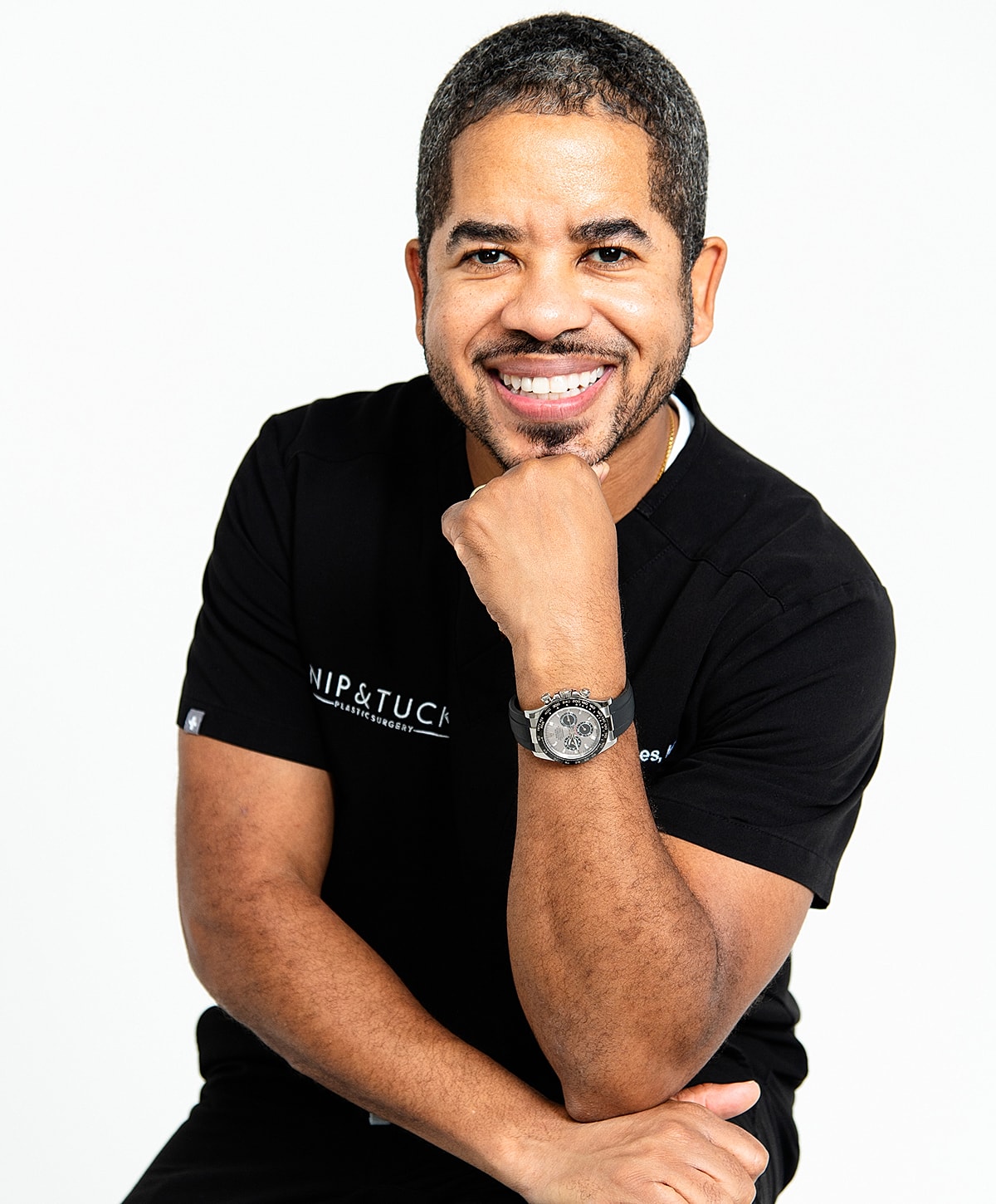

After examining your skin, fat distribution, abdominal structure, and health, Dr. Jones will recommend Lipo 360, focused liposuction, a tummy tuck, or a combined plan. Contact Nip & Tuck Plastic Surgery for a consultation in Atlanta, GA.
Your final cost depends on the procedure length, treatment areas, anesthesia, facility fees, liposuction technique, and whether other procedures are included. You’ll receive a personalized quote after your consultation.
Lipo 360 is usually considered an elective cosmetic procedure, so health insurance generally does not cover it. Nip & Tuck offers financing options for qualified patients.
Skin with good elasticity may contract after fat removal, but Lipo 360 does not remove loose skin or tighten skin enough to replace a tummy tuck. Dr. Jones may discuss energy-assisted skin tightening or surgery based on the amount of laxity you have.
Lipo 360 is designed to improve shape rather than produce significant weight loss. Changes in inches, clothing fit, and body proportions are usually more meaningful than the number on the scale.
Yes. Lipo 360 can reduce fullness around the abdomen, flanks, and back in men. Dr. Jones adjusts the contouring pattern to suit the patient’s anatomy and preferred shape.
Removed fat cells don’t grow back, but the remaining fat cells can become larger if you gain weight. Keeping your weight stable through a balanced diet and regular activity will help protect your results.
Many patients wear one for four to six weeks, although the exact schedule varies. Dr. Jones will give you instructions based on your procedure and adjust them as you heal.
Yes. Lipo 360 is often paired with a Brazilian Butt Lift when the patient has enough eligible donor fat. Dr. Jones will assess whether combining the procedures is safe and appropriate for your goals.